
Bio News
Brain cells that may control fear

These overlooked brain cells may control fear and Post-Traumatic Stress Disorder
No longer dismissed as the brain's mere "glue," astrocytes have emerged as central architects of fear memory. Recent research reveals that these non-neuronal cells do far more than provide structural support; they actively modulate the formation, retrieval, and extinction of fear responses through real-time interaction with neurons.
By precisely manipulating astrocyte activity, scientists were able to directly dial the intensity of fear memories up or down. This shift in understanding moves us beyond a neuron-centric view of the mind and opens the door to novel therapeutic targets for treating anxiety and trauma-related disorders.
Earth’s most abundant lifeforms has a fatal flaw
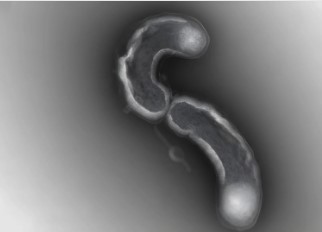
Summary
SAR11 bacteria dominate the world’s oceans by being incredibly efficient, shedding genes to survive in nutrient-poor waters. But that extreme streamlining appears to backfire when conditions change. Under stress, many cells keep copying their DNA without dividing, creating abnormal cells that grow large and die. This vulnerability may explain why SAR11 populations drop during phytoplankton blooms and could become more important as oceans grow less stable.
Plant Compound Forces Breast Cancer "Self-Destruction"
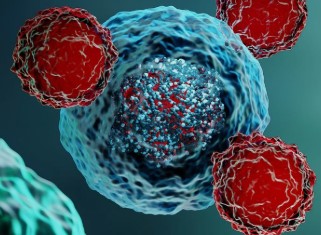
The Discovery
Unlike traditional drugs that simply block an enzyme, DHL-11 uses a unique "destabilizing" strategy:
Targeting IMPDH2: The compound latches onto a specific enzyme (IMPDH2) that cancer cells rely on for growth.
Protein Degradation: It disrupts the partnership between IMPDH2 and other proteins, causing the cancer-sustaining enzyme to physically break down.
Metabolic Chaos: With the enzyme gone, the cancer cell suffers from a drop in guanine production, a massive spike in oxidative stress (ROS), and irreparable DNA damage.
Apoptosis: Overwhelmed by this damage, the cancer cells are forced into programmed cell death (self-destruction).
Key Results
Reduced Metastasis: In animal models, the compound significantly slowed tumor growth and prevented the cancer from spreading.
Precision Targeting: It was particularly effective in patient-derived "organoids" (mini-tumors grown in a lab) that expressed high levels of the target enzyme.
High Safety Profile: Initial tests show favorable biosafety, meaning it attacks the cancer while showing low toxicity to healthy cells.
250 Year Old Mystery Solved
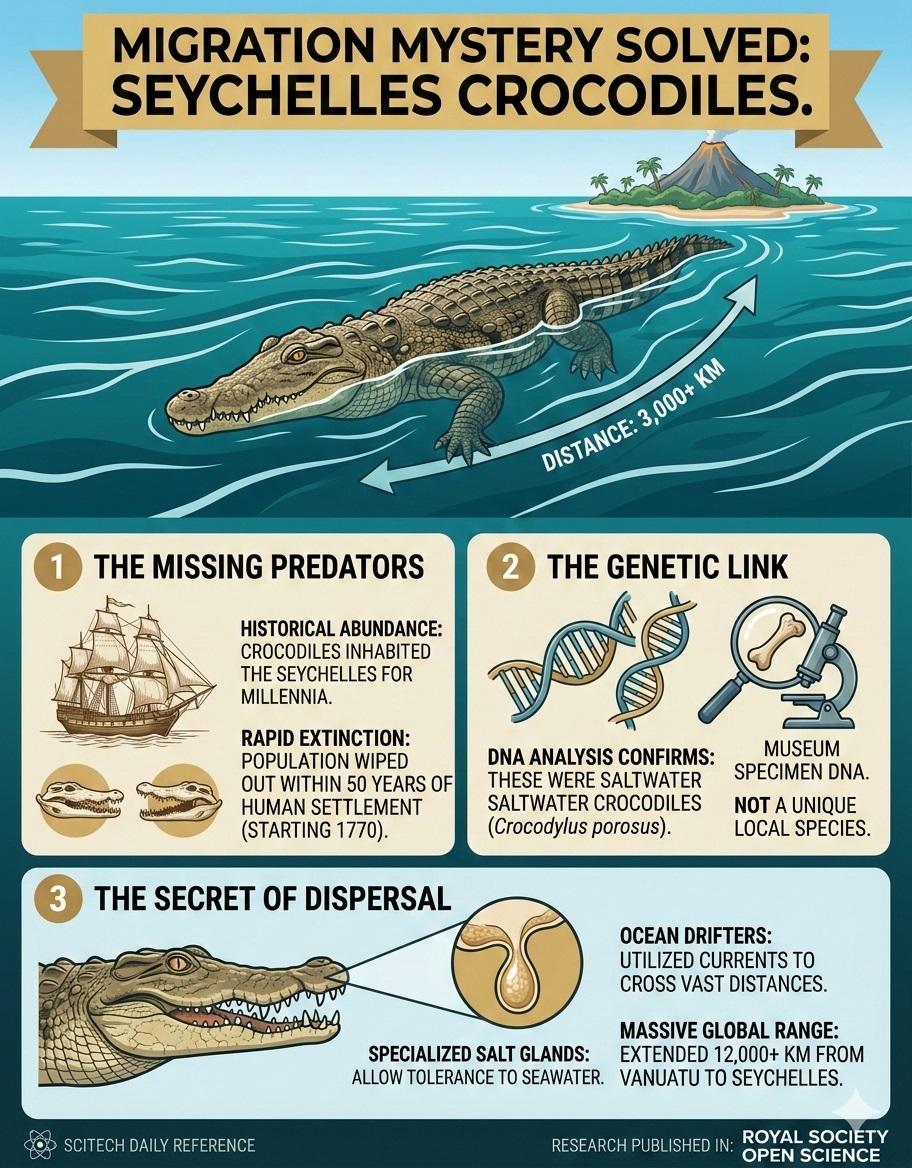
origin of extinct crocodiles in the Seychelles
Researchers used DNA analysis to confirm that the crocodiles that once inhabited the Seychelles were Saltwater crocodiles (Crocodylus porosus). This proves the species was capable of traveling at least 3,000 kilometers (~1,800 miles) across the open Indian Ocean to reach the remote islands.